

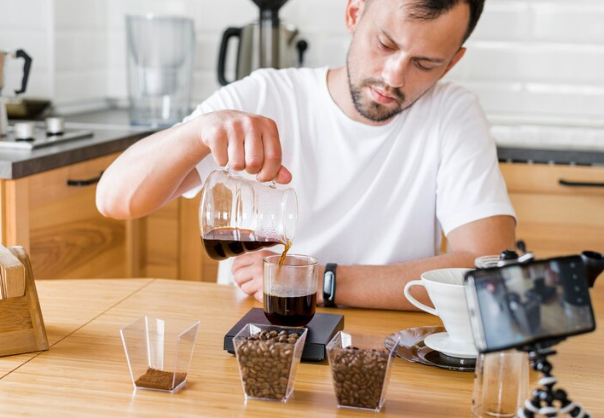
Step 1: The Essential Prelude of Preheating
The brewing process begins not with coffee, but with hot water. Pouring a generous amount of hot water into your empty French press carafe, swirling it around, and then discarding it serves a vital dual purpose that is too often overlooked. Primarily, this act preheats the vessel, bringing the glass or metal up to the ideal brewing temperature so that it does not act as a heat sink when you add your brewing water, which would cause a rapid temperature drop and impede proper extraction. Secondly, it cleans and rinses the carafe of any residual coffee oils or minute grounds from a previous brew, ensuring that no stale flavors can compromise the purity of the new coffee you are about to make. This simple thirty-second ritual is a hallmark of a deliberate and professional approach, setting the stage for everything that follows.
Step 2: Measuring and Grinding for Optimal Extraction
With a warm and clean carafe ready, the next step is to measure and grind your coffee beans. For a balanced and robust brew, a coffee-to-water ratio of 1:15 is an excellent starting point. This translates to approximately 55 grams of whole bean coffee for every 1 liter (or 1000 grams) of water. Using a digital scale to measure this by weight is profoundly more accurate than using tablespoons, as the density of coffee can vary significantly. Once measured, the beans must be ground immediately. The target grind size is unequivocally coarse; you are aiming for a texture that closely resembles coarse sea salt or rustic breadcrumbs. When you look at the grounds, you should be able to distinguish individual particles, not a fine powder. This specific grind size is critical because it creates a bed of coffee that the mesh filter can press down effectively, allowing the liquid coffee to pass through while trapping the larger grounds. A finer grind will seep through the filter, resulting in a muddy, gritty, and unpleasantly bitter cup.
Step 3: The Bloom and the Pour
Add the freshly ground coffee to the bottom of the preheated carafe. Now, start your timer and begin the pour. Your water should be fresh and filtered, heated to a temperature between 195°F and 205°F (about 30 seconds off a full boil). Begin by pouring just enough water to saturate all the grounds—roughly twice the weight of the coffee in water. You will witness the coffee bubbling and swelling as it releases trapped carbon dioxide in a process known as “the bloom.” Allow this to happen for 30 seconds. This degassing is crucial; if skipped, the CO2 will repel water and lead to uneven extraction. After the bloom, continue pouring the rest of your water in a slow, steady spiral, ensuring all grounds are fully immersed. Place the lid on the press with the plunger fully raised, but do not plunge yet.
Step 4: The Patient Art of Steeping
The total steeping time, including the bloom, should be four minutes. This is the universally accepted sweet spot for immersion brewing, allowing enough time for the hot water to dissolve the sugars, acids, and flavorful oils from the coffee grounds without extracting an excessive amount of the harsh, bitter compounds that emerge later in the process. During this time, the complex chemical reaction of extraction is taking place, and patience is your greatest ally. Setting a reliable timer is non-negotiable for consistency. A one-minute deviation can mean the difference between a beautifully balanced cup and a harsh, over-extracted one.
Conclusion
The rich, oil-infused, and profoundly flavorful cup that results is a direct reflection of the care invested in the process. It is a brew that proudly showcases the true character of the coffee bean, unfiltered and uncompromised. So, take these steps to heart, invest in the few key tools that make a difference, and elevate your morning routine from a mundane task to a cherished, sensory ritual. The path to the perfect cup of French press coffee is now clearly laid out before you, waiting to be brewed.
Frequently Asked Questions (FAQ)
Q1: What is the ideal coffee-to-water ratio for a French press?
A great starting point is a 1:15 ratio, meaning 1 gram of coffee for every 15 grams of water. For a standard 1-liter (32-ounce) French press, this equates to about 55-60 grams of coffee. You can adjust this slightly to your taste—a little more coffee for a stronger brew (e.g., 1:14) or a little less for a milder one (e.g., 1:16). Using a digital scale for this measurement is highly recommended for consistency.
Q2: Why is my French press coffee cloudy or gritty?
>>>>>>>>The metal mesh filter of a French press cannot catch these very fine particles, so they end up in your cup. Ensure you are using a proper burr grinder set to a very coarse setting to minimize this issue. A small amount of sediment is normal, but it should not be excessive or gritty.
Q3: Can I let the coffee steep for longer than 4 minutes?
While you can, it is generally not advisable. Steeping beyond four minutes leads to over-extraction, where the water begins to dissolve undesirable, bitter compounds from the coffee grounds.
Q4: How do I clean my French press to avoid old coffee flavors?
Proper cleaning is vital. Never pour coffee grounds down your sink. Wash the carafe, lid, and all filter components (the mesh plate and spiral spring) with warm, soapy water. Use a dedicated brush to scrub the mesh filters thoroughly, as coffee oils can solidify and become rancid. Rinse everything well and allow it to air-dry completely before reassembling.
Q5: What kind of coffee beans are best for a French press?
The French press is a versatile brewer that works well with a wide range of coffee beans.


